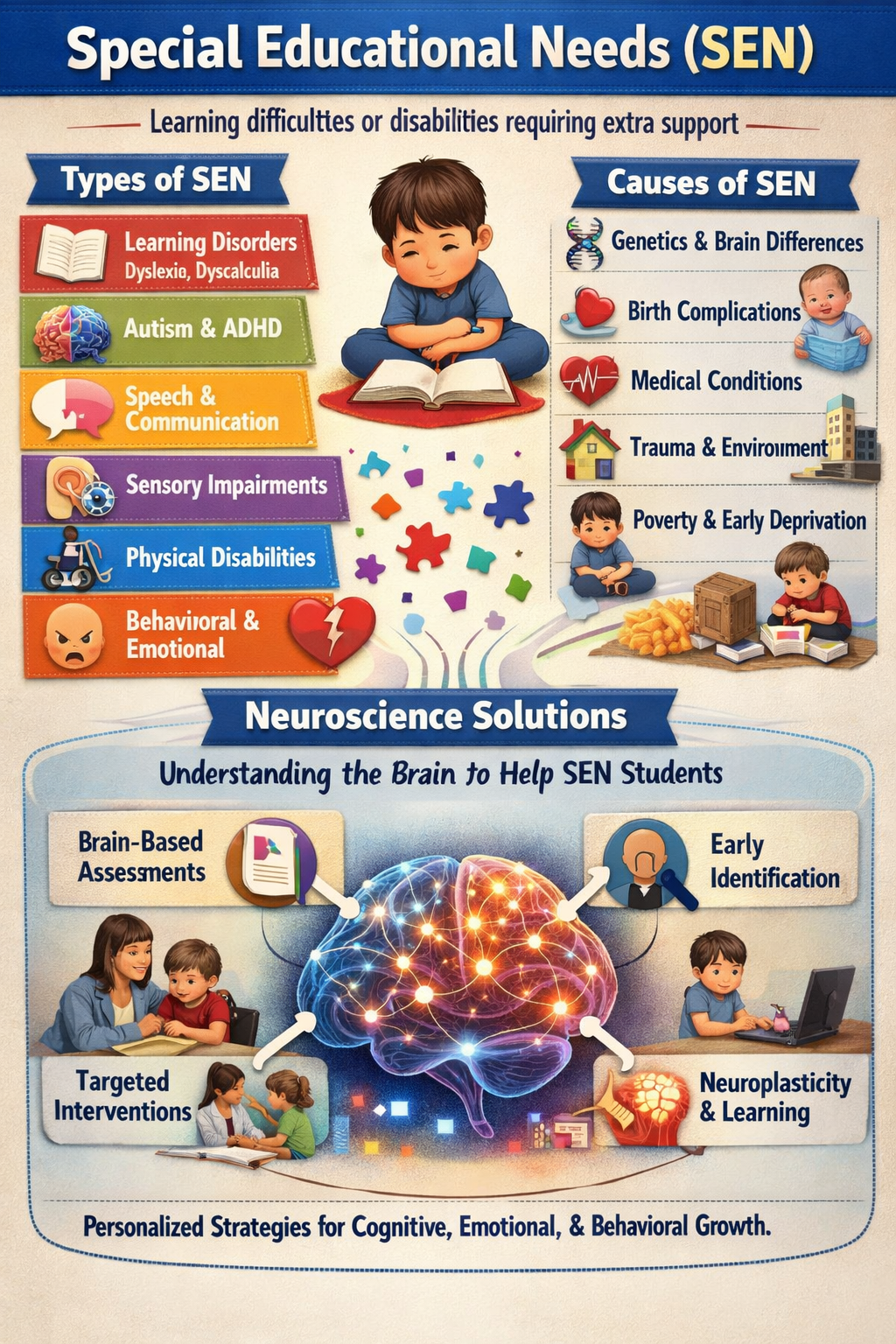
Biology · Learning · Environment · Experiences

A Better Future for Every Learner

Understanding BioLEX (Biology, Learning, Environment and Experiences) helps teachers and school leaders design better support for learners with Special Educational Needs (SEN) — especially those with learning difficulties, ADHD, autism, language disorders, emotional and behavioral disorders (EBD), and intellectual disabilities.

BioLEX — Supporting Every Learner
Special Educational Needs

What is Special Educational Needs (SEN)?

A child or young person has Special Educational Needs (SEN) when they have a learning difficulty or disability that calls for special educational provision to be made for them. SEN is not a single condition — it is an umbrella term that recognises that some learners require additional or different support to access education and reach their full potential.

SEN can arise from a wide range of causes, including neurological differences, developmental delays, emotional difficulties, or environmental factors. What matters most is not the label, but identifying the barrier to learning and putting the right support in place early.

BioLEX applies the Bio-Learning-Environment-Experiences framework to understand each learner's unique profile — enabling schools, clinicians, and families to respond with precision, compassion, and evidence.

Learning Difficulties ADHD Autism Spectrum Language Disorders EBDs Intellectual Disabilities Dyslexia Dyscalculia Developmental Delays Sensory Processing
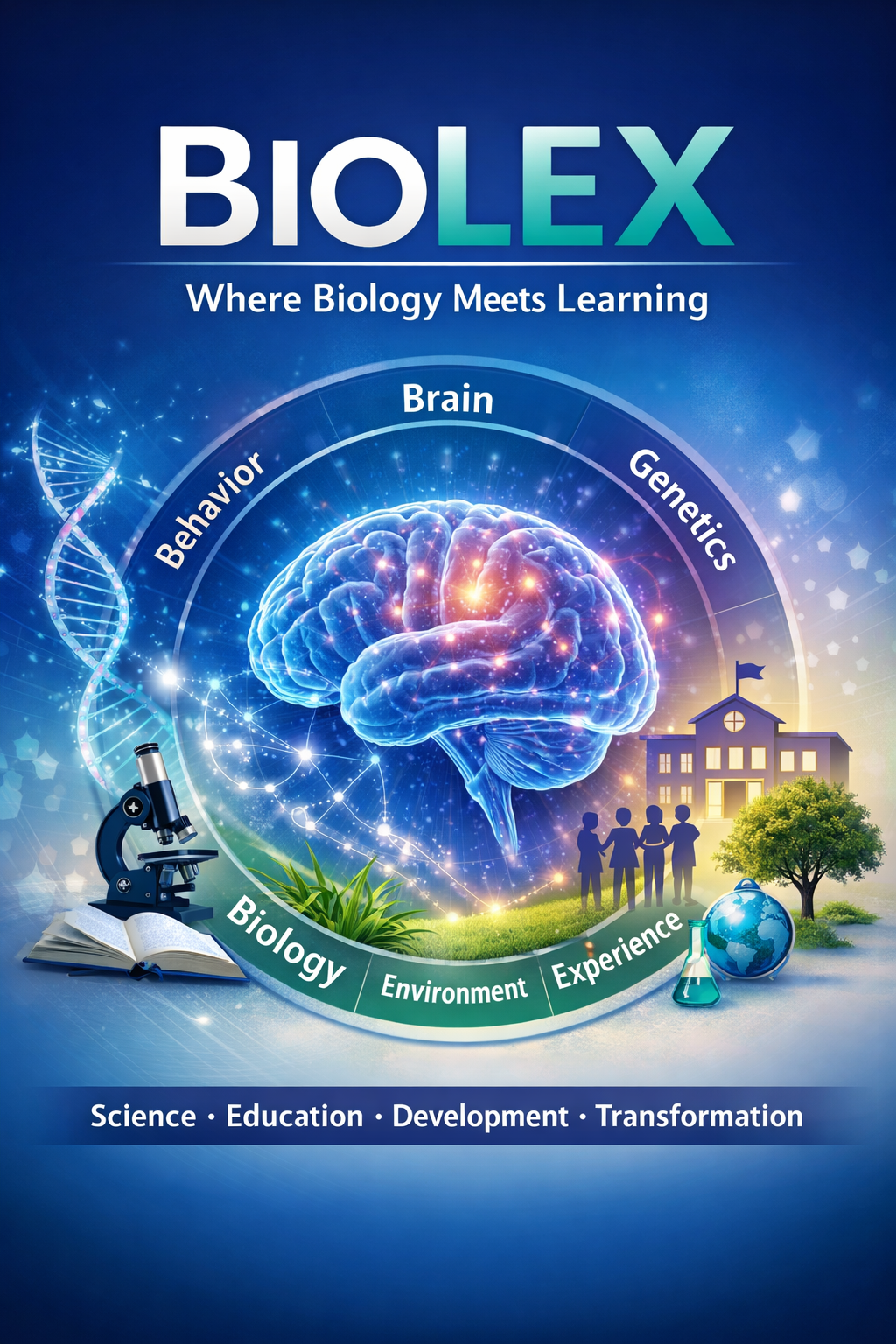
Special Educational Needs — BioLEX overview

How BioLEX maps SEN domains to personalised support

MTSS Framework

Student Support Matrix

How NeuroSEN Clinic maps every learner's academic performance and emotional-behavioural profile to the right tier of personalised support.

Quadrant 1
Thriving Achievers
High Performance · No EBDs
  • Consistent academic success
  • Emotionally regulated, socially adaptive
Support focus: Benefit from enrichment, leadership roles, talent development, and advanced coursework.
Multi-Tiered System of
Supports (MTSS)
Quadrant 2
Resilient Strivers
High Performance · With EBDs
  • Strong academic outcomes despite emotional/behavioral challenges
  • May mask stress, anxiety, or self-regulation difficulties
Support focus: Counseling, emotional regulation, burnout prevention and advanced learning.
Quadrant 3
Stable Maintainers
Average Performance · No EBDs
  • Meeting expectations but not excelling
  • Often overlooked because they "cause no problems"
Support focus: Motivation, study skills, goal setting and differentiated instruction.
Increasing Levels of Intensity
Tier 3 At Risk
Tier 2 Some Risk
Tier 1 Low Risk
Assessments / Interventions
Quadrant 4
At-Risk Copers
Average Performance · With EBDs
  • Emotional/behavioral issues affect learning
  • Risk of performance decline without intervention
Support focus: Early identification, SEL programs, teacher support.
Quadrant 5
Hidden Strugglers
Underperformers · No EBDs
  • Academic difficulties without behavioral red flags
  • Often labeled as "lazy" or "slow"
Support focus: Academic diagnosis, remedial support, individualized instruction.
Quadrant 6
High-Need Learners
Underperformers · With EBDs
  • Significant academic + emotional/behavioral challenges
  • Most vulnerable group
Support focus: Intensive multidisciplinary intervention, IEPs, Therapies, Family support.